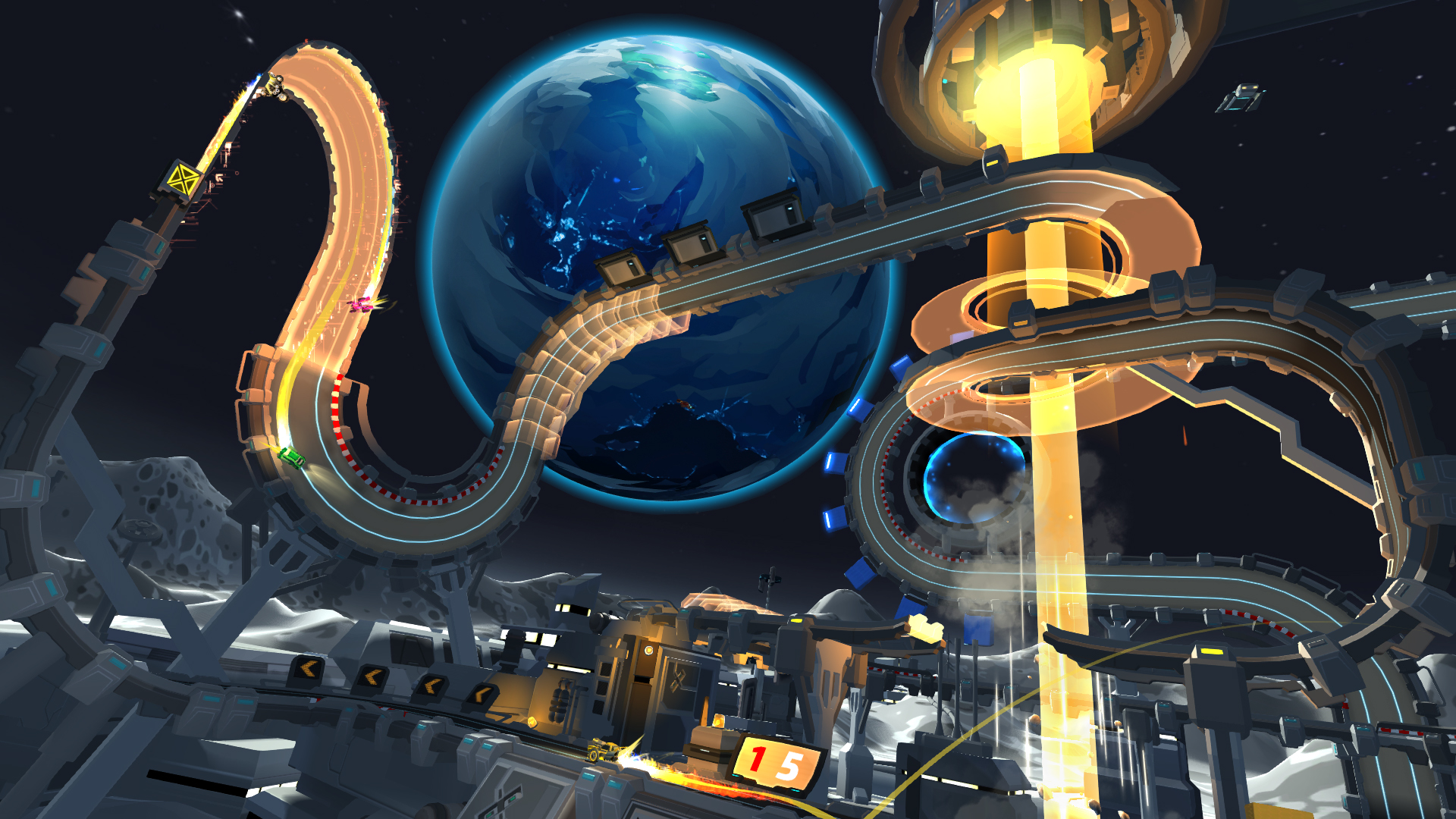
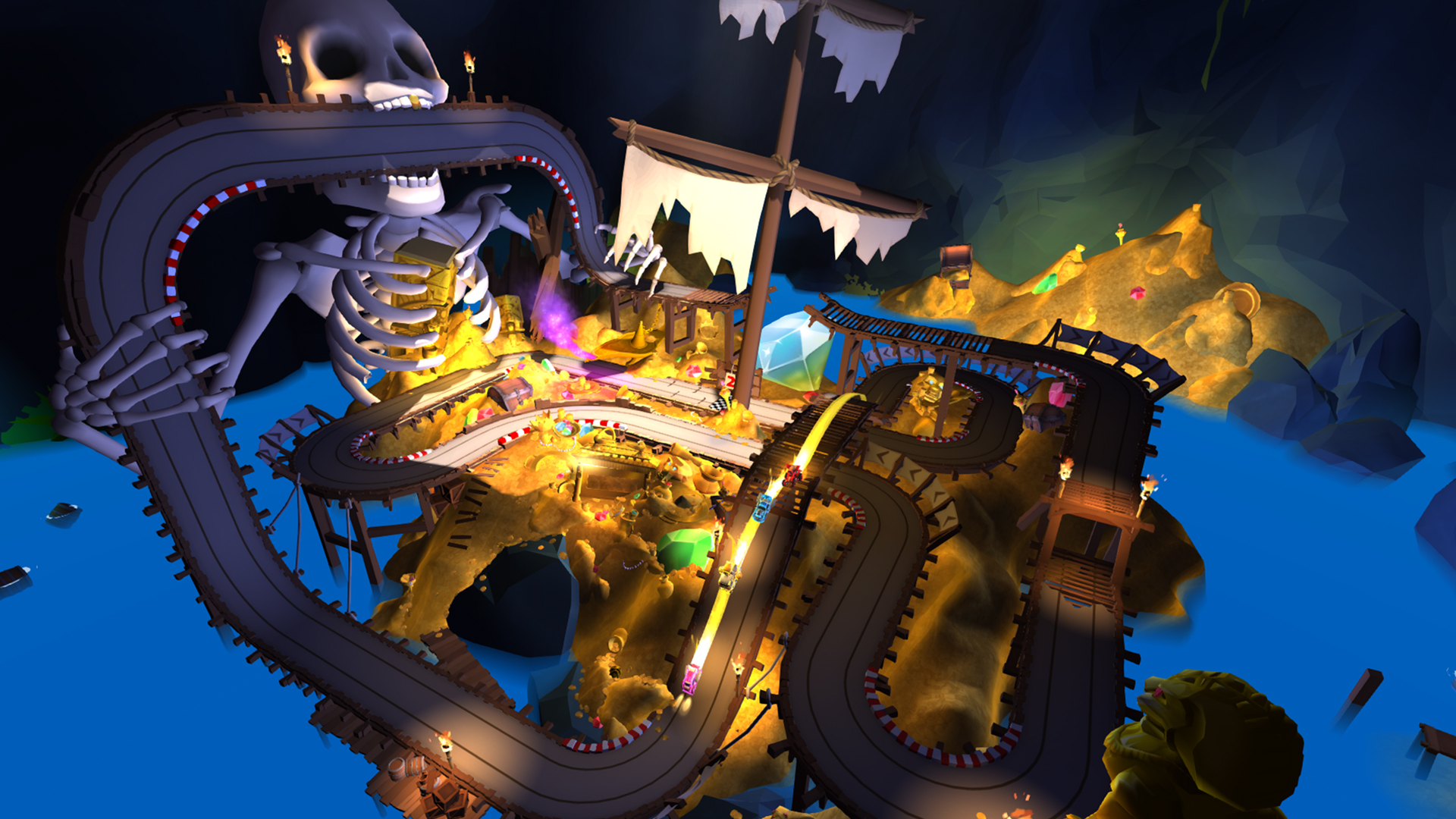
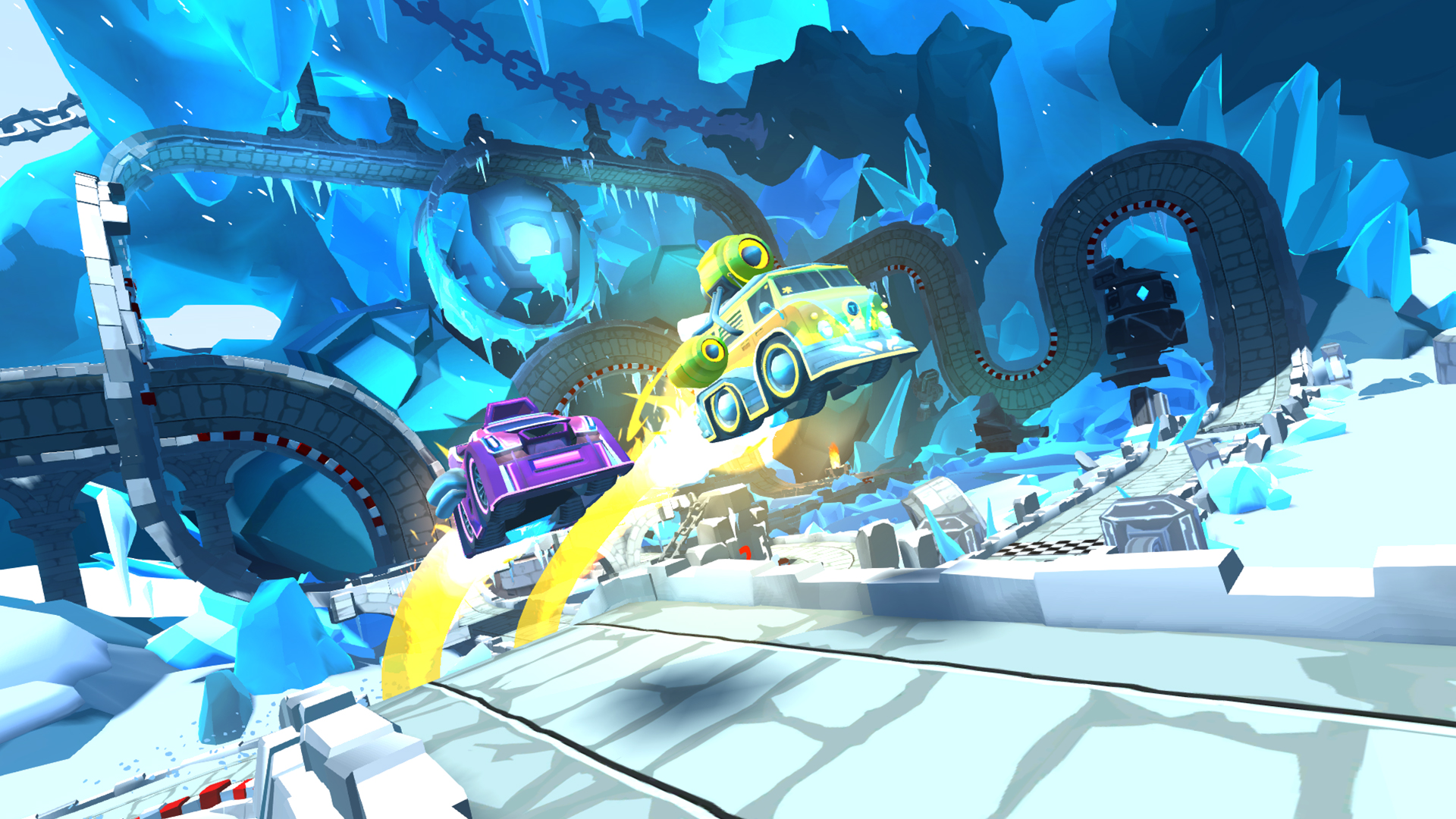
The majority of levels in Tiny Trax can be played from a seated position, with VR adding only a unique sense of depth. However, you can peer around and under stretches of track to get a better view of distant corners, you can gaze skywards to follow your car as it rides the curve of a giant loop, or, in one memorable instance, you can plunge your head below a body of water to get a better view, muffling the game's audio and music as a result.
With attention focused solely on a car and the small space around it, the moments where it turns a sharp bend and seems about to drive straight into your nose only to sweep away at the last second never fails to surprise. "Really early on we had a car coming down a tunnel and turning [just before the player's head], and we thought, 'That's the game'," Marsden says. "The rest of it was just fleshing out different ideas based on building the player up to those experiences."
It was Dave Gabriel, the QA tester, who pushed to shift the gameplay away from control over speed and towards control over steering. "That's when we discovered the overturn idea, where if you overturn the car you skid to a halt. It completely removed the idea of speed from the player's control. As long as you're turning properly you'll make it round the corner." [...] Push too hard on the thumbstick, and the car would come to a grinding halt. [...] A HUD element gives the player visual feedback on the force and direction of steering.
"There aren't that many - if any - synchronous multiplayer VR games," he says, and the potential for players to keep returning to the game is where FuturLab believes it will stand apart in terms of value.
The first attempt at VR development is always a learning experience; few developers come out of it with a game as sprightly and polished as Tiny Trax, but all emerge with the insight necessary to hit the ground running on a second project. As soon as this finishes we're going straight onto another one with Sony.