Installeer de app
Hoe installeer je de app op iOS
Volg de onderstaande video om te zien hoe je onze site als web-app op je startscherm installeert.
Opmerking: Deze functie is mogelijk niet beschikbaar in sommige browsers.
Je gebruikt een verouderde webbrowser. Het kan mogelijk deze of andere websites niet correct weergeven.
Het is raadzaam om je webbrowser te upgraden of een browser zoals Microsoft Edge of Google Chrome te gebruiken.
Het is raadzaam om je webbrowser te upgraden of een browser zoals Microsoft Edge of Google Chrome te gebruiken.
Archief - Orkanen
Het archief is een bevroren moment uit een vorige versie van dit forum, met andere regels en andere bazen. Deze posts weerspiegelen op geen enkele manier onze huidige ideeën, waarden of wereldbeelden en zijn op sommige plaatsen gecensureerd wegens ontoelaatbaar. Veel zijn in een andere tijdsgeest gemaakt, al dan niet ironisch - zoals in het ironische subforum Off-Topic - en zouden op dit moment niet meer gepost (mogen) worden. Toch bieden we dit archief nog graag aan als informatiedatabank en naslagwerk. Lees er hier meer over of start een gesprek met anderen.


Lakigigar
Legacy Member
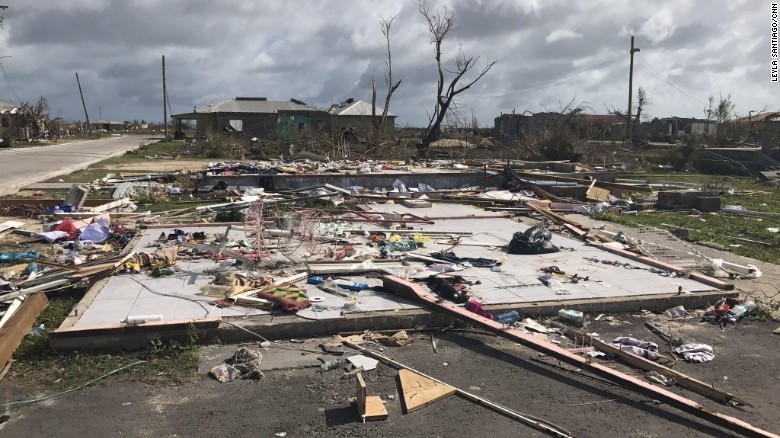
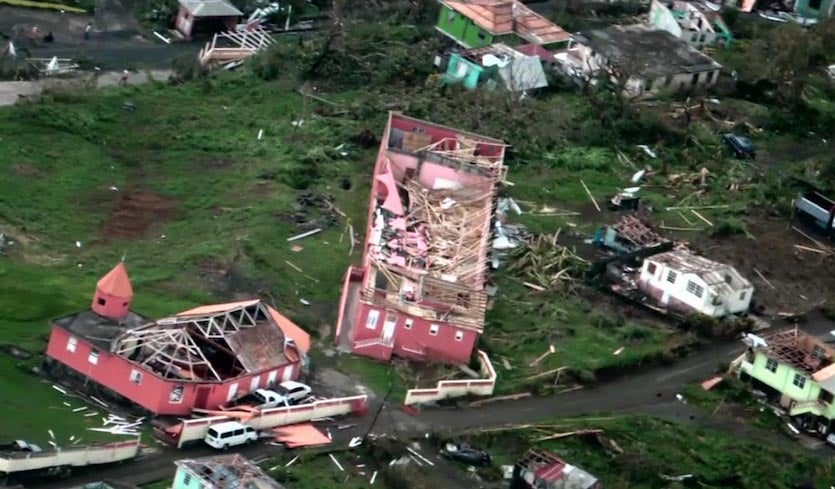
Two years ago, in August 2015, Tropical Storm Erika hit Dominica, killing 31 people and destroying more than 370 homes. Many towns were cut off as roads were blocked and power was lost in what was at that point the most devastating storm to lash Dominica since Hurricane David in 1979.
Erika had wind speeds of a maximum 50mph (85kmh) – much less than Maria’s 160mph (260kmh).
In 2015, prime minister Roosevelt Skerrit said damage from Erika could set the island’s development back two decades.
Dit was nog uren vooraleer het oog arriveerde.
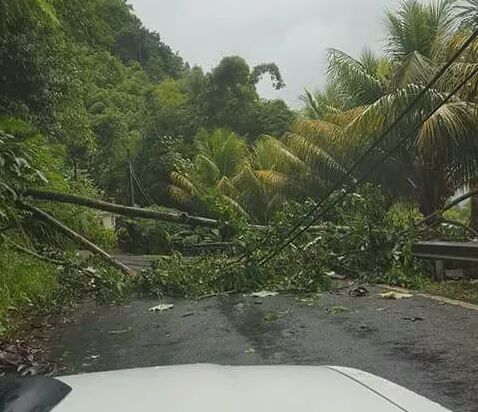
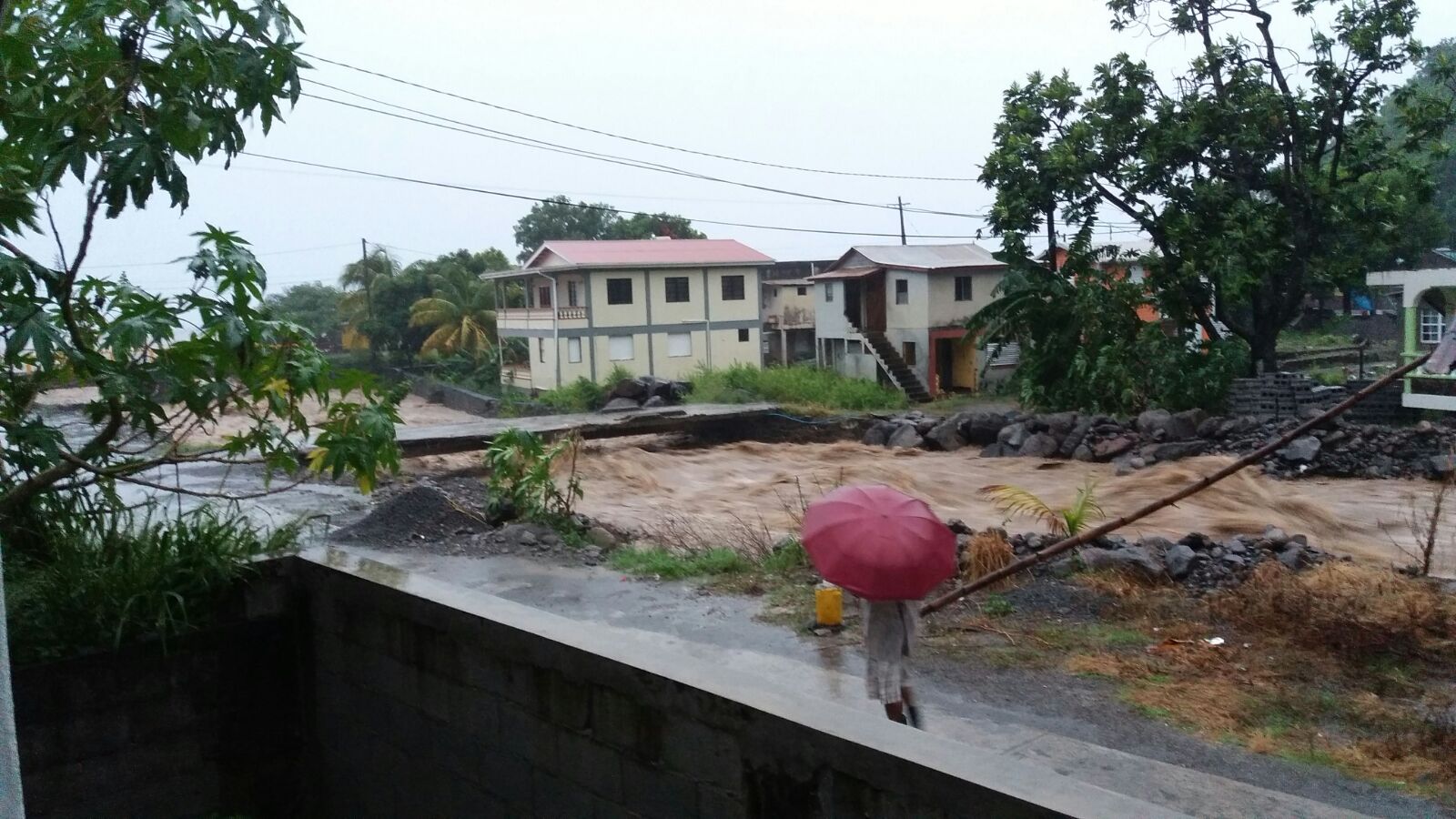
Guadeloupe – the bridgehead for aid for Irma-hit French territories – ordered all residents to take shelter in a maximum-level “violet alert” effective from 8pm local time as powerful rains drenched the French Caribbean island.
St Kitts and Nevis, the British island of Montserrat, and the islands of Culebra and Vieques were also on alert.
On Martinique, which is also part of France, energy supplier EDF said power had been cut off from 16,000 homes, although a hurricane warning on that island was later downgraded to a tropical storm.
In rain-lashed St Lucia, which also faced a tropical storm warning, flooding, mudslides and power outages were reported in parts of the island.
Dominica’s DBS radio station had been broadcasting news as the hurricane swirled across the island, reporting damage to the roof of the Princess Margaret hospital in the capital, Roseau.
Shortly after reporting that something had crashed into the station building, DBS has now gone quiet.

Lakigigar
Legacy Member
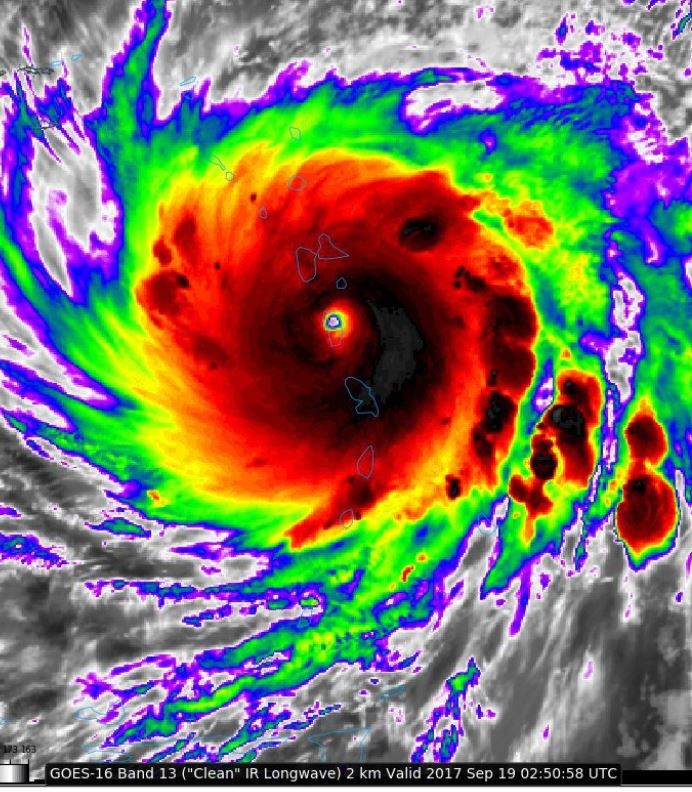
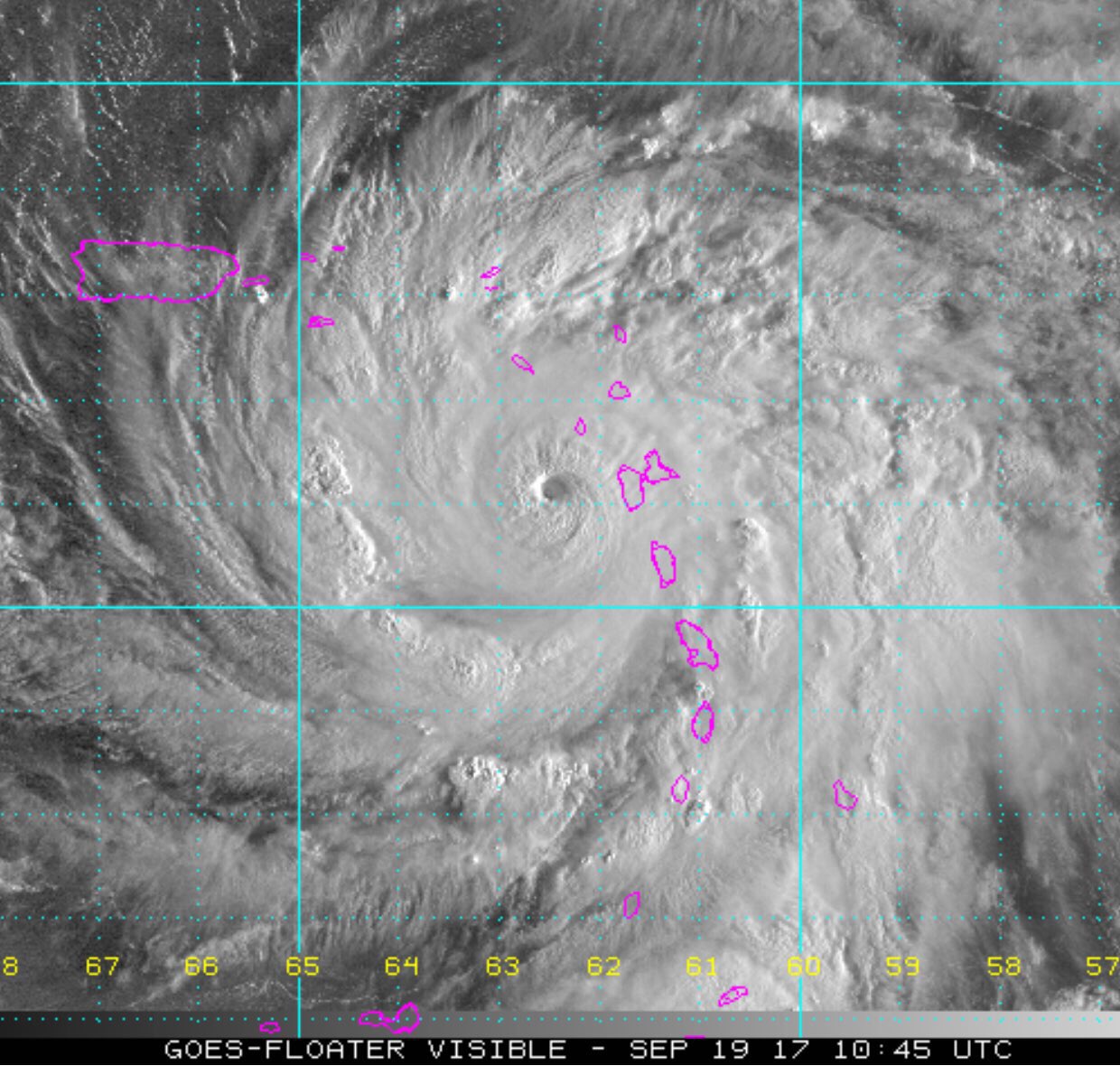
“Maria is developing the dreaded pinhole eye,” the center warned.
That’s a sign of an extremely strong hurricane likely to get even mightier, said University of Miami hurricane researcher Brian McNoldy. Just like when a spinning ice skater brings in their arms and rotates faster, a smaller, tighter eye shows the same physics, he said.
Maria’s eye shrank to a narrow 10 miles (16km) across. “You just don’t see those in weaker hurricanes,” McNoldy said.
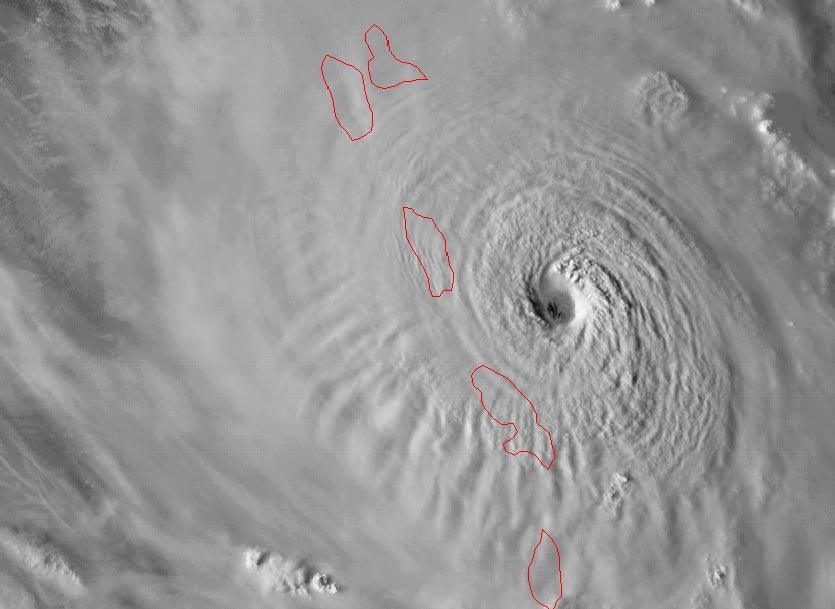
Irma was de eerste orkaan van categorie 5 ooit die de Leeward Islands aandeed. Dit gebeurde nooit eerder. Nu twee weken later wordt Maria de tweede orkaan van categorie 5 die de Leeward Islands aandoet.



waffel
Legacy Member
Slynx zei:'t ziet er daar m.i. alleszins niet goed uit. Benieuwd of die eilanden dat nog te boven gaan komen, gezien daar zo van het toerisme geleefd wordt ...
Absoluut niet. Dit zullen ze vanaf nu de donkere jaren noemen daar.
Heb besloten om toch te vertrekken zaterdag naar Florida, fuck it. Merci voor alle updates hier Lakigigar.
Lakigigar
Legacy Member
https://www.accuweather.com/en/weather-news/2017-atlantic-hurricane-season-is-far-from-over-us-remains-at-risk-for-additional-strikes/70002741

We hebben nog 8 namen over (Nate, Ophelia, Philippe, Rina, Sean, Tammy, Vince, Whitney). Ik ben benieuwd of we het Grieks alfabet halen. Wellicht niet, maar de kans is wel aanwezig.
Additional hurricanes, beyond that of Jose and Maria, are likely over the Atlantic and may threaten the United States for the rest of the 2017 season.
Hurricane season runs through the end of November, and it is possible the Atlantic may continue to produce tropical storms right up to the wire and perhaps into December.
"I think we will have four more named storms this year, after Maria," according to AccuWeather Hurricane Expert Dan Kottlowski.
"Of these, three may be hurricanes and one may be a major hurricane," Kottlowski said.
The numbers include the risk of one to two additional landfalls in the United States.
On average, strong west to northwest winds with cooler and drier air tend to scour tropical systems out of the western Atlantic during October and November.
However, this year, AccuWeather meteorologists are concerned that these winds may not occur until later in the autumn or may be too weak to steer tropical threats away from the U.S.
We hebben nog 8 namen over (Nate, Ophelia, Philippe, Rina, Sean, Tammy, Vince, Whitney). Ik ben benieuwd of we het Grieks alfabet halen. Wellicht niet, maar de kans is wel aanwezig.
Lakigigar
Legacy Member
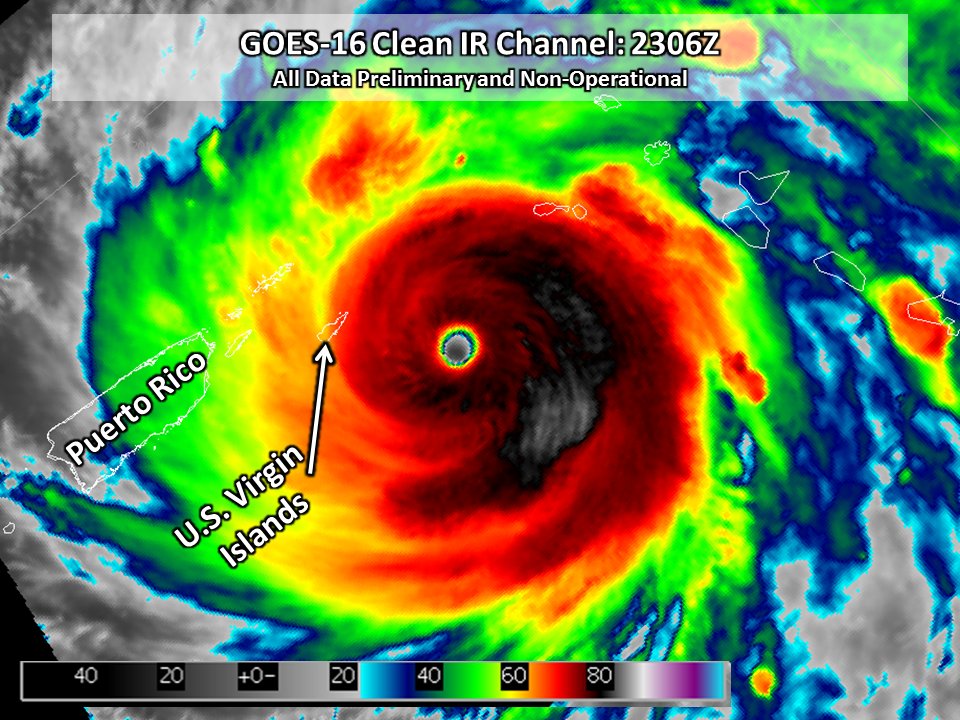
175 mph nu, en 909 hPa.
Qua luchtdruk heeft Maria nu de 10e laagste luchtdruk waargenomen ooit in de Atlantische Oceaan, en doet daarmee zelfs beter dan Irma eerder deze maand (914 hPa). Qua sustained winds heeft Maria nu een gedeelde 7e plaats met 15 mph onder het record van Allan en nog steeds 10 mph onder Irma's max sustained winds die een gedeelde tweede plaats heeft.
Het seizoen van 2017 is nog maar het zesde seizoen die twee categorie 5 orkanen had, en is het tweede seizoen die twee categorie 5 orkanen hadden die ergens aan land kwamen met die intensiteit (bovendien allebei ook nog bij de Leeward Islands). Daarmee doet het op veel aspecten denken aan het rampseizoen 2005 die onder andere Katrina, Rita en Wilma in één seizoen had.
Qua luchtdruk heeft Maria nu de 10e laagste luchtdruk waargenomen ooit in de Atlantische Oceaan, en doet daarmee zelfs beter dan Irma eerder deze maand (914 hPa). Qua sustained winds heeft Maria nu een gedeelde 7e plaats met 15 mph onder het record van Allan en nog steeds 10 mph onder Irma's max sustained winds die een gedeelde tweede plaats heeft.
Het seizoen van 2017 is nog maar het zesde seizoen die twee categorie 5 orkanen had, en is het tweede seizoen die twee categorie 5 orkanen hadden die ergens aan land kwamen met die intensiteit (bovendien allebei ook nog bij de Leeward Islands). Daarmee doet het op veel aspecten denken aan het rampseizoen 2005 die onder andere Katrina, Rita en Wilma in één seizoen had.

Lakigigar
Legacy Member
Lakigigar
Legacy Member

Nog altijd cat 3, nu richting de Carolina's, maar zal wellicht niet aan land komen.

Jose bestaat niet meer (gewoon een lagedrukgebied), maar Lee dat al uitgestorven was wordt wellicht weer terug tot leven gewekt, en zal volgens de verwachtingen terug uitgroeien tot een orkaan. Lee bevindt zich wel ver weg van de menselijke beschaving, dus zal geen bedreiging vormen voor land.

Jose op 9 september. WALL OF DEATH

Lakigigar
Legacy Member
https://weather.com/storms/hurricane/news/september-2017-most-active-month-on-record-for-atlantic-hurricanes
September 2017 was de meest actieve maand uit een orkaanseizoen. Ook bracht september 2017 het grootste aantal orkaandagen (35) in één maand, en breekt het daarmee een record uit 1929 (goede winter trouwens!).
https://www.washingtonpost.com/news/energy-environment/wp/2017/09/19/the-scariest-thing-about-2017s-hurricanes-they-got-really-bad-really-fast/?utm_term=.dcfd439daafb
En nog een record
September 2017 was de meest actieve maand uit een orkaanseizoen. Ook bracht september 2017 het grootste aantal orkaandagen (35) in één maand, en breekt het daarmee een record uit 1929 (goede winter trouwens!).
https://www.washingtonpost.com/news/energy-environment/wp/2017/09/19/the-scariest-thing-about-2017s-hurricanes-they-got-really-bad-really-fast/?utm_term=.dcfd439daafb
But DeMaria said that this season is seeing more rapid intensification events than usual and that Maria, in particular, appears to have set a key record for hurricane rapid intensification in the Atlantic.
“Looking back through the records, Maria went from a tropical depression to a Category 5 hurricane in just two and a half days,” he said. “I couldn’t find any other tropical cyclones in our historical record that went that quickly from a depression to a Category 5 hurricane.”
That’s a big problem, because rapid intensification sets the stage for worst-case scenarios. Sadly, that’s what happened to the Caribbean island of Dominica on Monday night, hit by Maria at full Category 5 strength.
There’s little chance to warn people or for them to prepare if rapid intensification occurs, so forecasters naturally want to be able to have a handle on it — but it’s a struggle.
The National Hurricane Center technically defines rapid intensification as a wind speed increase of at least 35 miles per hour in 24 hours. All four of the most intense Atlantic storms in 2017 beat that easily:
On the evening of Aug. 24, a day before landfall, Harvey was a Category 1 hurricane with 85-mile-per hour winds. Twenty-four hours later, at landfall in Texas, the storm was a Category 4 with 130-mile-per-hour winds.
At 11 a.m. on Monday, Sept. 4, Hurricane Irma was already a strong Category 3 storm with 120-mile-per-hour winds. But Irma then radically strengthened further, becoming a superpowered upper-end Category 5 storm with 180-mile-per-hour winds in just 24 hours.
Following behind Irma in the middle of the day on Sept. 7, Hurricane Jose was a Category 1 storm with 90-mile-per-hour winds. Twenty-four hours later, it was rated a high-end Category 4 with 150-mile-per-hour winds.
Beven’s “pinhole eye” language came as Hurricane Maria reached Category 4 intensity, despite having been a Category 1 just 12 hours earlier. But Maria wasn’t done. The storm would leap further to Category 5 strength, ultimately increasing in intensity by 65 miles per hour in 24 hours.
While scientists don’t fully understand rapid intensification, they do know that it has something to do with hurricanes being in a highly favorable environment for intensification in general.
Rapid strengthening tends to happen when waters are warm, when that warm water is deep, when the atmosphere is moist and when there’s little adverse wind flow that could disrupt the storm, according to research papers on the topic and interviews with experts.
And broadly speaking, what we appear to be seeing this year — similar to the catastrophic Atlantic hurricane season of 2005 — is that the environment is extremely hurricane friendly. Storms simply rev their engines and find that the fuel is of the highest grade, and there’s a deep well of it. Then they take off, and there’s nothing to disrupt them.
En nog een record
This is the first time in known history that the Atlantic has had two storms with 150+ mph winds raging at the same time: Irma and Jos
Lakigigar
Legacy Member
Lee trouwens nog uitgegroeid tot een orkaan van categorie 2.

Kleintje, in het westen zie je trouwens nog Maria liggen
Heel erg vreemd pad dat Lee ook aflegt, heeft een beetje een eigen wil.
Beide orkanen gaan nu samensmelten en door de jetstream gegrepen worden en gevoerd worden richting Ierland en Groot-Brittanie, waar het bij ons later op de zondag en maandag regen moet brengen.
Kleintje, in het westen zie je trouwens nog Maria liggen
Heel erg vreemd pad dat Lee ook aflegt, heeft een beetje een eigen wil.
Beide orkanen gaan nu samensmelten en door de jetstream gegrepen worden en gevoerd worden richting Ierland en Groot-Brittanie, waar het bij ons later op de zondag en maandag regen moet brengen.
Lakigigar
Legacy Member

Op dit moment zijn we het 7e meest actieve orkaansseizoen, met gemiddeld nog 28% van de ACE (accumulated cyclone energy) te gaan, en dus nog een hele maand waar orkanen zich kunnen ontwikkelen.
Merk ook op dat actieve orkaanseizoenen vaak in series voorkomen, dus dat belooft ook al niet veel goeds voor volgend jaar, of zelfs 2019 indien er geen El Nino ontstaat.
Het archief is een bevroren moment uit een vorige versie van dit forum, met andere regels en andere bazen. Deze posts weerspiegelen op geen enkele manier onze huidige ideeën, waarden of wereldbeelden en zijn op sommige plaatsen gecensureerd wegens ontoelaatbaar. Veel zijn in een andere tijdsgeest gemaakt, al dan niet ironisch - zoals in het ironische subforum Off-Topic - en zouden op dit moment niet meer gepost (mogen) worden. Toch bieden we dit archief nog graag aan als informatiedatabank en naslagwerk. Lees er hier meer over of start een gesprek met anderen.