Brussels - NATO and Russia agreed on Friday to launch a joint study of 21st-century security threats with an eye to future cooperation to combat those threats, NATO's secretary general said. The move, which came at their first formal ministerial meeting since Russia's invasion of Georgia in August 2008, highlights the efforts of both sides to improve their cooperation on security challenges such as drugs and terrorism.
"We have agreed to launch a joint review of the 21st century's common threats and challenges," Anders Fogh Rasmussen said after talks with the foreign ministers of NATO members and Russia.
"The aim is to agree on the real threats all 29 nations (NATO's 28 members plus Russia) face today, a list which I am confident will not include each other," Rasmussen said.
Russian Foreign Minister Sergei Lavrov hailed the move, saying that Friday's meeting "confirmed the importance of the NATO-Russia Council (NRC) as a vital forum" for security questions.
"The understanding is growing that security in Europe cannot be provided for many countries without Russia," Lavrov said.
Rasmussen first made the call for a NATO-Russia security analysis in his maiden speech as secretary general in September. His idea was to build up confidence between the Cold War foes by working together to identify dangers which could threaten both sides.
NATO's relationship with Russia hit a post-Cold War low in August 2008 after Russia invaded NATO hopeful Georgia in response to Georgia's attack on two breakaway regions.
Russia and NATO both now say that they want to improve cooperation on issues such as the conflict in Afghanistan and the fight against international terrorism.
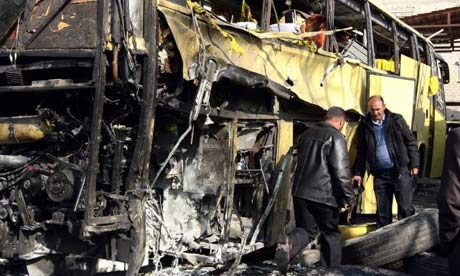
"The bomb on the express train last week in Russia which killed 26 innocent people is an example of a real threat we all face together and against which we must work together," Rasmussen said.
Friday's meeting also discussed Russian proposals for a new, legally-binding treaty aimed at defining the rules for security and military action across Europe, Russia and North America.
"It is inadmissible that somebody should strengthen their security at the expense of others," Lavrov said.
Italian Foreign Minister Franco Frattini, regarded in NATO as one of the bloc's "doves" in relations with Russia, said that the idea was a "good proposal."
At the same time, he stressed that "of course the first precondition to address the issue is that this cannot be seen as an alternative to NATO, which remains the pillar for international and Euro-Atlantic security."
Rasmussen echoed that stance, saying that "there can be no doubt whatsoever that NATO will remain our framework for Euro-Atlantic security."
Russian President Dmitry Medvedev first called for a new security pact in Berlin in June 2008. He published the details of his proposal in November this year.
The proposals received a lukewarm response in the West, where states sceptical of Russia's intentions saw them as an attempt to give the country a veto over NATO's security plans.
Lavrov rejected that claim on Friday, saying that "in the Russian draft there is absolutely no hidden meaning, no attempt made to try and acquire a veto over NATO's actions."
At the same time, he said that his country reserved the right to oppose NATO policies such as the construction of bases in Romania and Bulgaria and the alliance's military support for Georgia.
What Russia sees as the Western supply of offensive weapons to Georgia "is a very serious problem indeed. Some data show that the country is back to its pre-war levels. ... Everyone sees how risky it is to arm this regime," he said.
In a further sign of conflict, NATO foreign ministers called on Russia to reverse its acceptance of the independence of the breakaway Georgian zones of South Ossetia and Abkhazia, a call Lavrov rejected.
"We cannot overturn the decision because it was they themselves who wanted to separate themselves," he said.
But comments after the meeting suggested that both sides were more than happy to focus on cooperation and put their differences aside.
"Today's meeting made it clear that we will not and cannot let those disagreements overshadow our cooperation in other areas," Rasmussen said.
"Today's meeting went constructively, and outlined some very concrete and far-sighted measures," Lavrov agreed.